Firefly : We Hardly Knew Thee
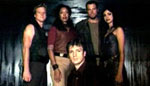
If only Fox had aired the original two-hour pilot rather than the hastily thrown together “we need more action” episode as the series’ premiere, if only Fox had put together a better advertising campaign for its launch, if only they hadn’t stuck it on Friday nights (generally a black hole for ratings), if only they had let the show build an audience … well, we could extend the “what ifs” all the way down the food chain to wonder “what if the night-shift janitor at Fox had done something different” and still not change the reality: Firefly has been canceled.
The show arrived in September amid a flurry of high expectations for the critically-acclaimed producer of cult hits Buffy the Vampire Slayer and Angel, with many critics suggesting the show might be the “sleeper” hit of the Fall season. But the inter-industry scuttlebutt around the series suggested trouble: Fox demanded that Whedon remake the premiere episode to have more action and less character development and they placed on Friday night, hardly a placement suggesting Fox’s overwhelming confidence in the show. Plus, the show already faced an uphill battle with viewers in terms of its hybrid genre.
With the exception of Enterprise, science-fiction shows haven’t exactly fared well in the television marketplace in the past few years, what with the demise of The X-Files and Farscape. Add to that that Whedon wasn’t exactly playing by the standard set of rules for the sci-fi genre. “This is sort of a science fiction-western-drama-action-comedy-hybrid,” Whedon said in interview before the show’s premiere. The “sci-fi/western” feel to it took what was always “subtext”—that space, the final frontier, was a metaphor for the American west and the period of disillusionment after the American Civil War—and made it “the text.” For some viewers, that tact, was boldly announced by its western-style theme and the presence of six guns, bar room brawls, and western-looking apparel (if you ask me, the comfortable, casual clothing was a welcome change from the tight, lycra garb of Star Trek mythos—what? they’ve made space ships that can move at the speed of light but still can’t make comfortable clothing?). The overt western-ness of the show doubtless made many viewers uneasy.
But, the most jarring generic choice Whedon and co-producer Tim Minear made was perhaps the decision NOT to have aliens. A western with Indians? A space show without aliens? That’s simply unheard of. Indians in westerns and aliens in sci-fi are conveniences in genres hungry for conflict, which, in turn, breeds easy story-lines. Can’t think of a story? Have aliens/Indians attack. Aliens are even more convenient than Indians since you can give them have three-heads, make them telepathic, or gift them with super-human strength—an easy tool for imagination-starved writers needing a quick way into a plot. By taking away the easy weird-alien plots, Whedon and company were writing sci-fi without a net. And neither the audience nor Fox were willing to stay around long enough to see if they could keep the highwire act going.
The premise behind the show’s refusal to focus either on alien life or futuristic technology (Serenity often seems held together by duct tape compared to the wizardry of, say, the Enterprise), is Whedon’s contention that “in the future, people will be exactly the same as they are now, only they’ll have spaceships.” Technology may advance, but people and their problems stay the same. Firefly did illuminate more of what appears to be Whedon’s official world view: that large institutions, corporations, and governments are, at best, useless, misguided, and inefficient (the Council of Watchers in Buffy the Vampire Slayer), or, at worst, pernicious, corrupt, and evil (Angel’s Wolfram and Hart and Firefly’s Alliance). The real heroes in Whedon’s imaginary universes are the ragtag individuals and the makeshift families which they form.
Minear and Whedon in their respective announcements could scarcely conceal their anger, disappointment, and disgust at the fate of Firefly. Minear even went so far as to criticize Fox directly: “Fox says they’re going to somehow air all eps. One expects with giant banner ads over them for Meet My Rich Phoney Sex Date or whatever unreality series they’ve got up their, er, sleeves.” Minear, of course, is referring to Fox’s answer to ABC successful reality show The Bachelor, but instead of having women vie over a handsome rich man, Fox tells the man is wealthy but is actually a poor schlep. Funny, huh? The Bachelor meets Candid Camera. The reality TV craze shows no signs of abating and the race is on for more and more outlandish premises. With a handful of media conglomerates owning all of the entertainment choices, all competing against one another and themselves, critic mark Crispin-Miller argues, “everyone will be looking for what works the fastest and they will drag standards down.” Firefly asked for time to develop, time to explore themes and characters over the course of a season. Apparently, it didn’t work fast enough.
Ray Bradbury says of science fiction that it’s merely imagining what the world will be like if we keep going they way we are. Although Whedon envisions a world in which “people will be exactly the same as they are now,” nonetheless, one major difference exists between the world today and the world of Firefly: the companion (hooker, prostitute, or whore in today’s parlance) is the most respected profession in the universe. Perhaps Minear and Whedon have extrapolated that if we keep glorifying talentless people vying for fame based on nothing more than their willingness to exploit their bodies and their affections (Who Wants to Marry a Multi-Millionaire, The Bachelor) or their dignity (American Idol, Survivor, Fear Factor), then the prostitute will be the highest level of society. Perhaps Firefly was too prescient for its own good. Perhaps through his dealings with the networks and entertainment conglomerates Whedon has learned first hand the banality of corporate evil so much apart of his vision of the Alliance.